
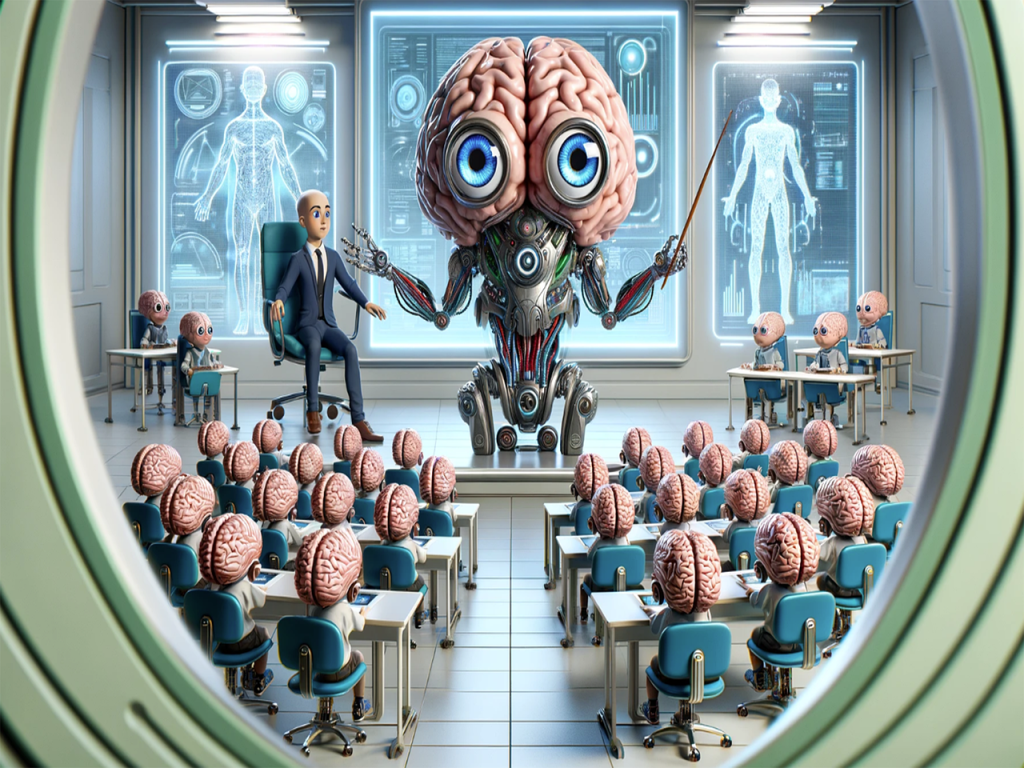

🎓 Education is evolving at lightning speed. Gone are the days of one-size-fits-all learning, rigid classrooms, and textbook-only approaches. Today, we’re witnessing a revolutionary transformation in how we acquire knowledge and skills. But are you keeping up with these changes?
Imagine a world where education adapts to you, not the other way around. A world where virtual reality takes you on historical journeys, where games make complex concepts fun, and where artificial intelligence personalizes your learning path. This isn’t science fiction—it’s the reality of education today. From blockchain-secured credentials to bite-sized lessons you can digest on your lunch break, the landscape of learning is being reimagined right before our eyes.
In this post, we’ll explore seven groundbreaking innovations that are reshaping education as we know it. Whether you’re a student, educator, or lifelong learner, these advancements promise to make learning more engaging, effective, and accessible than ever before. Let’s dive into the future of education and discover how these technologies are set to revolutionize the way we learn. 👨🏫👩🎓🚀


The Rise of Personalized Learning
Personalized learning is revolutionizing the education landscape, offering tailored experiences that cater to individual students’ needs, abilities, and learning styles. This innovative approach is transforming traditional one-size-fits-all models into dynamic, student-centered environments.
Adaptive Learning Technologies
Adaptive learning technologies are at the forefront of personalized education. These systems use algorithms to:
-
Assess student performance in real-time
-
Adjust difficulty levels automatically
-
Provide instant feedback and recommendations
Here’s a comparison of traditional vs. adaptive learning:
| Traditional Learning | Adaptive Learning |
|---|---|
| Fixed curriculum | Dynamic content |
| Uniform pace | Individual pacing |
| Limited feedback | Continuous assessment |
| Generic materials | Tailored resources |
Benefits of Individualized Learning Paths
Individualized learning paths offer numerous advantages:
-
Increased engagement and motivation
-
Improved retention of information
-
Faster progress in areas of strength
-
More support in areas needing improvement
-
Enhanced self-directed learning skills
Data-Driven Insights for Tailored Education
Data analytics play a crucial role in personalized learning:
-
Tracking student progress over time
-
Identifying learning patterns and preferences
-
Predicting potential challenges or roadblocks
-
Informing instructional decisions and interventions
AI-Driven Curriculum Customization
Artificial Intelligence is taking personalization to new heights by:
-
Creating adaptive content based on student interactions
-
Generating personalized study plans and recommendations
-
Offering intelligent tutoring systems for one-on-one support
-
Continuously refining and optimizing learning materials
As we explore the next frontier of educational technology, we’ll see how virtual and augmented reality are creating immersive learning experiences that complement personalized approaches.
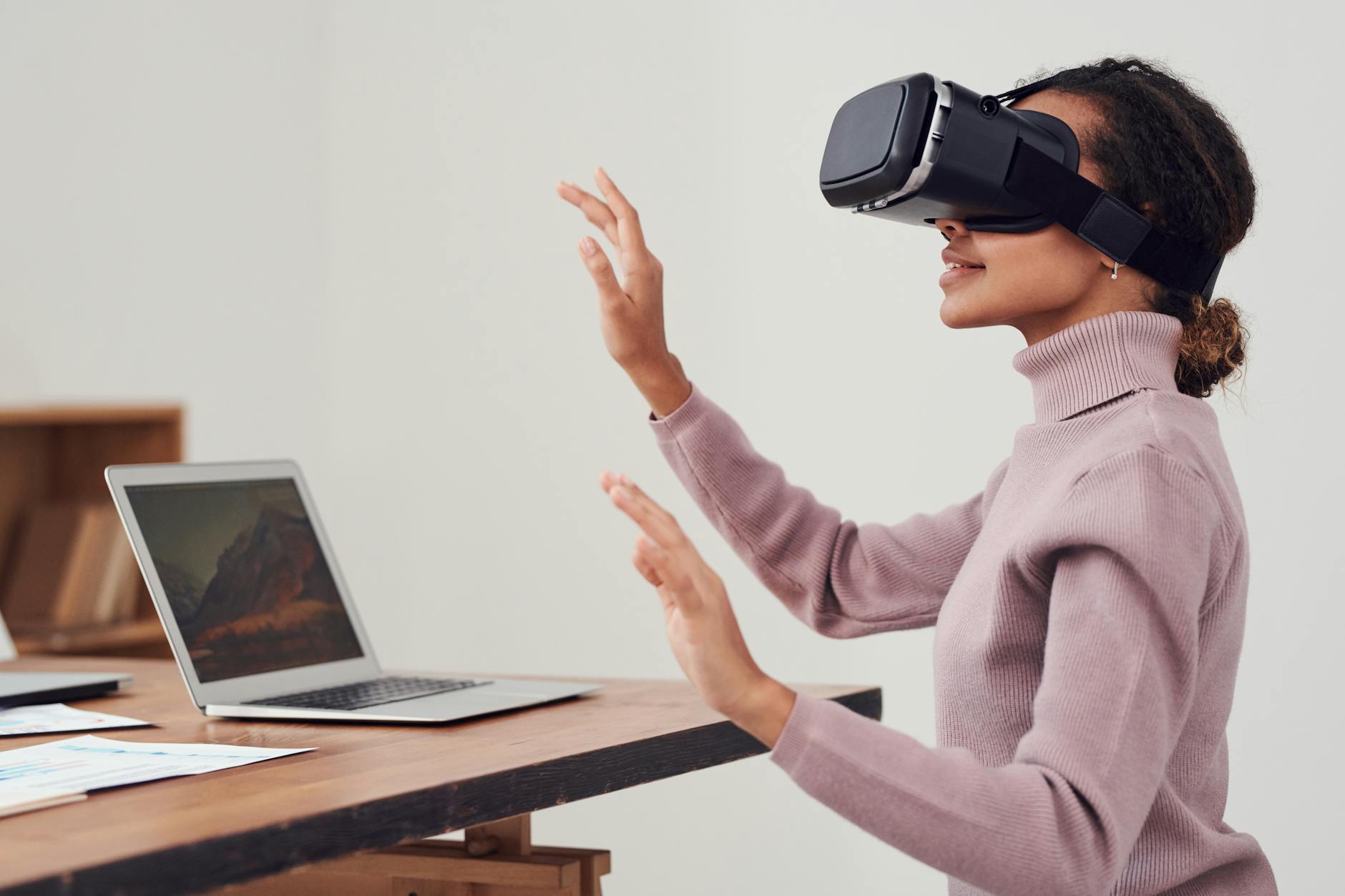
Virtual and Augmented Reality in Education
Virtual and Augmented Reality (VR/AR) technologies are revolutionizing the educational landscape, offering immersive and interactive experiences that enhance learning in unprecedented ways.
Accessibility for Remote Learners
VR and AR have bridged the gap for remote learners, providing access to high-quality educational experiences regardless of geographical location. These technologies enable students to:
-
Participate in virtual classrooms
-
Interact with 3D models and simulations
-
Collaborate with peers in shared virtual spaces
Enhanced Engagement and Retention
The immersive nature of VR/AR significantly boosts student engagement and information retention. Studies have shown:
| Metric | Traditional Learning | VR/AR Learning |
|---|---|---|
| Engagement | 60% | 90% |
| Retention Rate | 30% | 80% |
| Learning Speed | Standard | 1.5x Faster |
Virtual Field Trips and Simulations
AR and VR transport students to places and times otherwise inaccessible, offering:
-
Historical reconstructions (e.g., ancient civilizations)
-
Scientific explorations (e.g., inside the human body)
-
Geographical expeditions (e.g., underwater ecosystems)
Immersive Learning Experiences
These technologies create fully immersive learning environments that:
-
Cater to different learning styles
-
Provide hands-on practice in safe, controlled settings
-
Allow for repeated practice without resource constraints
As we explore the potential of VR and AR in education, it’s clear that these technologies are not just enhancing traditional learning methods but are fundamentally transforming how we approach education. Next, we’ll examine how gamification and game-based learning are further revolutionizing the educational landscape.
Gamification and Game-Based Learning
Gamification and game-based learning have revolutionized the educational landscape, making learning more engaging and interactive. This innovative approach incorporates game elements into educational content, transforming mundane tasks into exciting challenges.
Measuring Progress with Game Analytics
Game analytics provide valuable insights into student performance and learning patterns. By tracking metrics such as completion rates, time spent on tasks, and achievement levels, educators can:
-
Identify areas where students excel or struggle
-
Personalize learning paths for individual students
-
Adjust difficulty levels in real-time
| Metric | Purpose | Benefit |
|---|---|---|
| Completion Rate | Measure task accomplishment | Identify challenging areas |
| Time Spent | Assess efficiency | Optimize lesson duration |
| Achievement Levels | Track progress | Motivate through milestones |
Fostering Collaboration Through Multiplayer Games
Multiplayer educational games promote teamwork and social skills. Students learn to:
-
Communicate effectively
-
Delegate tasks
-
Solve problems collectively
-
Develop leadership skills
These collaborative experiences prepare students for real-world scenarios where teamwork is crucial.
Developing Problem-Solving Skills
Game-based learning presents students with complex challenges that require critical thinking. Through gameplay, students:
-
Analyze situations
-
Formulate strategies
-
Make decisions under pressure
-
Learn from failures and iterate solutions
These problem-solving experiences translate into valuable life skills applicable across various disciplines.
Increasing Student Motivation
Gamification taps into intrinsic motivation, making learning more enjoyable and rewarding. Key motivational elements include:
-
Points and rewards systems
-
Leaderboards for healthy competition
-
Narrative-driven learning experiences
-
Immediate feedback loops
By incorporating these elements, educators can significantly boost student engagement and retention of information.
As we explore the impact of gamification on education, it’s important to consider how these principles can be applied in conjunction with other innovative learning techniques.

Microlearning and Bite-Sized Content
In today’s fast-paced world, traditional lengthy learning sessions are giving way to more efficient and digestible formats. Microlearning and bite-sized content have emerged as powerful tools in modern education, catering to the evolving needs of learners.
Just-in-time learning opportunities
Microlearning provides learners with the ability to access information exactly when they need it. This just-in-time approach allows for:
-
Immediate application of knowledge
-
Reduced cognitive overload
-
Increased relevance and engagement
Improved knowledge retention
Bite-sized content has been shown to enhance information retention. Here’s how it compares to traditional learning methods:
| Aspect | Traditional Learning | Microlearning |
|---|---|---|
| Content Length | Long, comprehensive | Short, focused |
| Retention Rate | 20-30% | 70-90% |
| Time to Completion | Hours or days | Minutes |
| Cognitive Load | High | Low |
Mobile-friendly learning modules
The compact nature of microlearning content makes it ideal for mobile devices. Learners can:
-
Access lessons on-the-go
-
Utilize short breaks for learning
-
Seamlessly integrate education into daily routines
Adapting to shorter attention spans
In an era of information overload, microlearning addresses the challenge of diminishing attention spans by:
-
Breaking complex topics into manageable chunks
-
Utilizing varied media formats (text, video, infographics)
-
Encouraging active participation through quizzes and interactive elements
As we explore the next innovation, we’ll see how artificial intelligence and machine learning are further personalizing the educational experience.

Artificial Intelligence and Machine Learning
As education continues to evolve, artificial intelligence (AI) and machine learning (ML) are playing increasingly significant roles in transforming the learning experience. These technologies are revolutionizing various aspects of education, from student support to personalized learning paths.
Chatbots for Instant Support
Chatbots powered by AI are becoming invaluable tools in educational settings. They provide:
-
24/7 availability for student queries
-
Instant responses to common questions
-
Personalized assistance based on student profiles
These virtual assistants can handle a wide range of tasks, from answering course-related questions to providing administrative support, freeing up educators’ time for more complex interactions.
Predictive Analytics for Student Success
Machine learning algorithms are being leveraged to analyze vast amounts of student data, helping institutions:
-
Identify at-risk students early
-
Tailor intervention strategies
-
Optimize resource allocation
| Data Points | Insights Generated |
|---|---|
| Attendance | Engagement levels |
| Grades | Academic performance |
| Online activity | Learning patterns |
By utilizing predictive analytics, educators can proactively address potential issues and provide targeted support to enhance student outcomes.
Automated Grading and Feedback
AI-powered systems are streamlining the assessment process through:
-
Rapid grading of multiple-choice questions
-
Natural language processing for essay evaluation
-
Consistent and objective feedback
This automation not only saves time but also provides students with immediate feedback, facilitating faster learning and improvement.
Intelligent Tutoring Systems
Adaptive learning platforms use AI to create personalized learning experiences:
-
Customized learning paths based on individual progress
-
Real-time adjustments to difficulty levels
-
Targeted recommendations for additional resources
These systems can identify knowledge gaps and provide tailored content, ensuring that each student receives the most effective learning experience possible.
As we move forward, the integration of AI and ML in education promises to make learning more efficient, engaging, and accessible to all. Next, we’ll explore how collaborative and social learning platforms are further enhancing the educational landscape.

Collaborative and Social Learning Platforms
In today’s interconnected world, collaborative and social learning platforms are revolutionizing education by fostering engagement, creativity, and global connections. These platforms leverage technology to create dynamic learning environments that extend far beyond traditional classroom walls.
Real-time collaboration tools
Real-time collaboration tools have transformed the way students and educators interact. These tools enable:
-
Simultaneous document editing
-
Instant messaging and video conferencing
-
Shared whiteboards for brainstorming
Here’s a comparison of popular real-time collaboration tools:
| Tool | Key Features | Best For |
|---|---|---|
| Google Workspace | Document sharing, real-time editing | Group projects, research papers |
| Microsoft Teams | Video calls, file sharing, chat | Virtual classrooms, team meetings |
| Miro | Interactive whiteboards, mind mapping | Visual brainstorming, design thinking |
Project-based learning communities
Project-based learning communities provide students with opportunities to work on real-world problems, developing critical thinking and teamwork skills. These communities often:
-
Connect students with industry experts
-
Facilitate cross-disciplinary collaboration
-
Encourage peer feedback and iteration
Global classrooms and cultural exchange
Global classrooms break down geographical barriers, allowing students to:
-
Interact with peers from different cultures
-
Gain diverse perspectives on global issues
-
Develop intercultural communication skills
Virtual exchange programs and online forums create opportunities for students to engage in meaningful dialogue across borders, fostering global citizenship and understanding.
Peer-to-peer knowledge sharing
Peer-to-peer knowledge sharing platforms empower students to become both learners and teachers. These platforms often feature:
-
User-generated content and tutorials
-
Q&A forums moderated by subject experts
-
Skill-sharing marketplaces
By encouraging students to share their expertise, these platforms create a dynamic learning ecosystem where knowledge flows freely between peers.
As we explore the next section on blockchain in education, we’ll see how this technology is further enhancing the security and credibility of collaborative learning environments.

Blockchain in Education
Blockchain technology is revolutionizing various industries, and education is no exception. This innovative technology offers several benefits that can significantly improve educational processes and outcomes.
Streamlining Credit Transfer Processes
Blockchain can simplify and accelerate credit transfer processes between institutions. By creating a decentralized, immutable record of academic achievements, students can easily transfer credits without the need for time-consuming verification procedures.
Protecting Intellectual Property
Intellectual property protection is crucial in academia. Blockchain provides a tamper-proof system for recording and timestamping research findings, papers, and other academic works. This ensures proper attribution and helps prevent plagiarism.
Transparent Academic Records
Blockchain technology enables the creation of transparent and easily accessible academic records. This benefits both students and employers by providing a clear, verifiable history of academic achievements.
Secure and Verifiable Credentials
One of the most significant advantages of blockchain in education is the ability to create secure and easily verifiable credentials. This system can prevent fraud and simplify the verification process for employers and institutions.
| Benefits of Blockchain in Education | Description |
|---|---|
| Efficient Credit Transfer | Streamlined process for transferring credits between institutions |
| Enhanced IP Protection | Secure recording and timestamping of academic works |
| Transparent Records | Easy access to clear and verifiable academic histories |
| Secure Credentials | Fraud-resistant and easily verifiable academic credentials |
As we explore the potential of blockchain in education, it’s clear that this technology has the power to transform many aspects of the learning experience. From simplifying administrative processes to enhancing the security and verifiability of academic achievements, blockchain is set to play a crucial role in shaping the future of education.
The educational landscape is undergoing a remarkable transformation, driven by innovative technologies and approaches. From personalized learning experiences to immersive virtual reality environments, these advancements are reshaping how we acquire knowledge and skills. Gamification, microlearning, and AI-powered solutions are making learning more engaging and efficient, while collaborative platforms and blockchain technology are enhancing connectivity and credential verification in education.
As we embrace these innovations, it’s crucial to remember that technology should complement, not replace, the human element in education. The future of learning lies in striking a balance between cutting-edge tools and the irreplaceable guidance of educators. By staying open to these new possibilities and continuously adapting our learning strategies, we can create a more inclusive, effective, and exciting educational experience for learners of all ages and backgrounds.